The Fragility of Peace: Turkish Military Expansion and Limited Positive Outcomes for Displaced Villages
The Fragility of Peace: Turkish Military Expansion and Limited Positive Outcomes for Displaced Villages
After nearly six months without any bombardments or attacks by Turkish military forces in Iraqi Kurdistan due to the ongoing peace negotiations between the Turkish government and the Kurdistan Workers’ Party (PKK), Turkey conducted three bombardments in Khnera village of the Sidakan district and detonated explosive ordnance in Galy Rashava, in the Deraluk subdistrict of Duhok Governorate. This underscores the ongoing fragility of the peace process, as both parties continue to mobilize, expand their military road and tunnel networks, build new military bases, and reinforce existing ones.
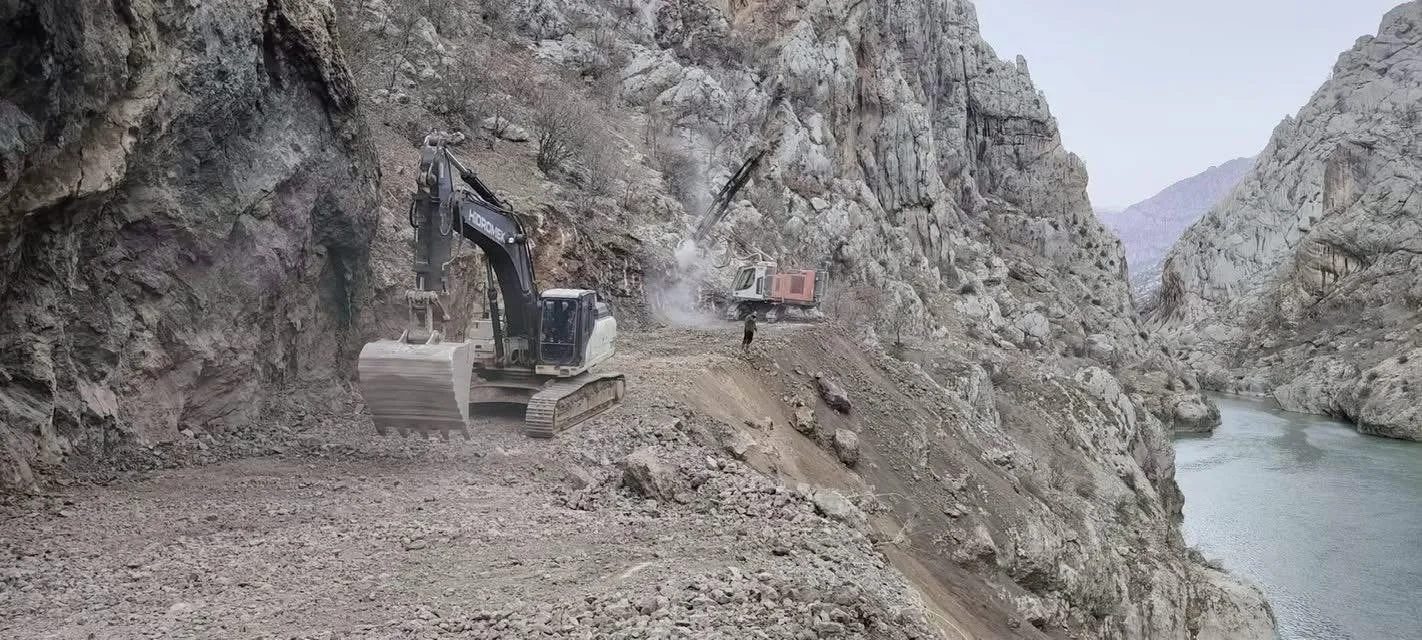
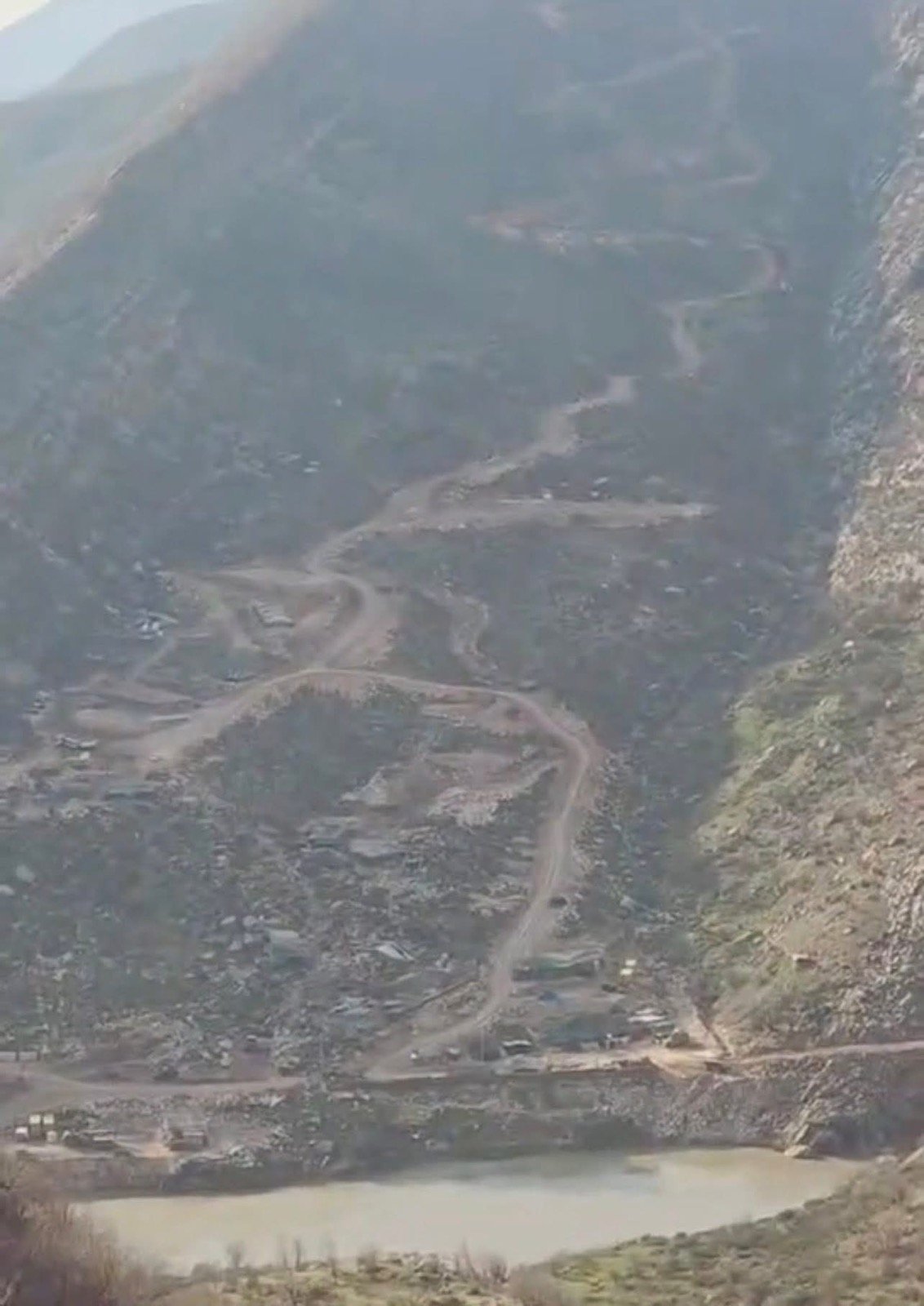
In the last three months, Turkish forces have completed the expansion of their military road networks and logistical capabilities, particularly in the Amedi district, in order to establish a buffer zone for their military presence in the area. Turkish forces have connected all military bases in Zap, Avashin, Matina, and Berwary Bala through newly constructed roads and have established three military compounds that include a hospital, a training center, and artillery bases.
The purpose of the buffer zone is likely to ensure that military movements and transportation are no longer dependent on public roads to access military installations. The main point of entry is located in the Galy Rashava valley, and all military bases in the region can now be accessed through this entry point.
To secure the area, on February 6, Turkish soldiers, along with construction equipment, planted explosive ordnance on mountain ridges to build a military road. Moreover, the area has been heavily deforested to construct the military road network and entry point. Additionally, the following day, likely as part of a training exercise in conjunction with the new military facilities, helicopters flew over the area and released flares that fell onto the mountain. The explosions damaged two well-known historical landmarks in the area, including Dushaw bridge, which was built during the Abbasid Empire.
Furthermore on February 13th, Turkish forces bombarded areas near Khnera highlands in the Sidakan district with artillery shelling with three total bombardments. These incidents mark the first bombardments or attacks since August 24th, 2025. There were 1,718 total bombardments and attacks in 2025, including 1,426 since the announcement of the ceasefire on March 1st, 2025, resulting in nine civilian casualties in 2025.
Despite ongoing developments and negotiations in the peace process, there have been only marginal positive outcomes for civilians in Turkish-occupied areas. In total, at least 1,192 villages have been impacted by Turkish operations through displacement, restricted access, and property damage. Of these, 183 villages have been completely displaced, while 602 villages have been partially displaced, with their displacement status remaining unchanged.
Of the 1,192 villages, 405 had previously been displaced due to the Anfal genocide committed by the Iraqi government in the 1980s and the ISIS campaign in the 2010s, and they still have not been able to return because of the Turkish military presence. Additionally, 39 villages that were displaced around Gara Mountain during the Claw-Lock operation conducted by Turkey in June 2024 have been unable to return, despite numerous attempts and continued denials throughout 2025.
Of the 1,192 villages, only five have seen a positive outcome. Five villages in the Batifa district of the Independent Administration of Zakho have been allowed to return. Thus, only 0.4% of villages have seen any marginal positive outcome in terms of return, demonstrating a lack of demobilization by both armed parties and a failure to effectively withdraw military forces from civilian areas, despite nearly a year of ceasefire.
On February 24, displaced villagers from Bery Gare in the Amedi district protested and blocked the main road between Amedi and Derulak, demanding access to return to their villages after more than 20 months without access and with no information or clarity on when their villages will be accessible again. This is especially critical with the harvest season approaching, which is a major source of income for the villagers.
Community Peacemaker Teams (CPT) expresses its deep concern regarding the expansion of Turkish military operations, the establishment of new military bases, the reinforcement of existing ones, the construction of military roads, the destruction of mountains, and the deforestation of the region. Additionally, CPT calls for more serious steps from both Turkey and the Kurdistan Workers’ Party (PKK) to advance the peace process and withdraw from civilian-populated areas.